
Citerna is a place to experience piano piano, slowly, without rushing. This picturesque village on the border between Umbria and Tuscany is officially one of the Borghi più belli d’Italia, and it’s not hard to see why. Citerna charms visitors with its medieval architecture, panoramic views and surprisingly rich collection of art.
First stop: the Rocca and the views
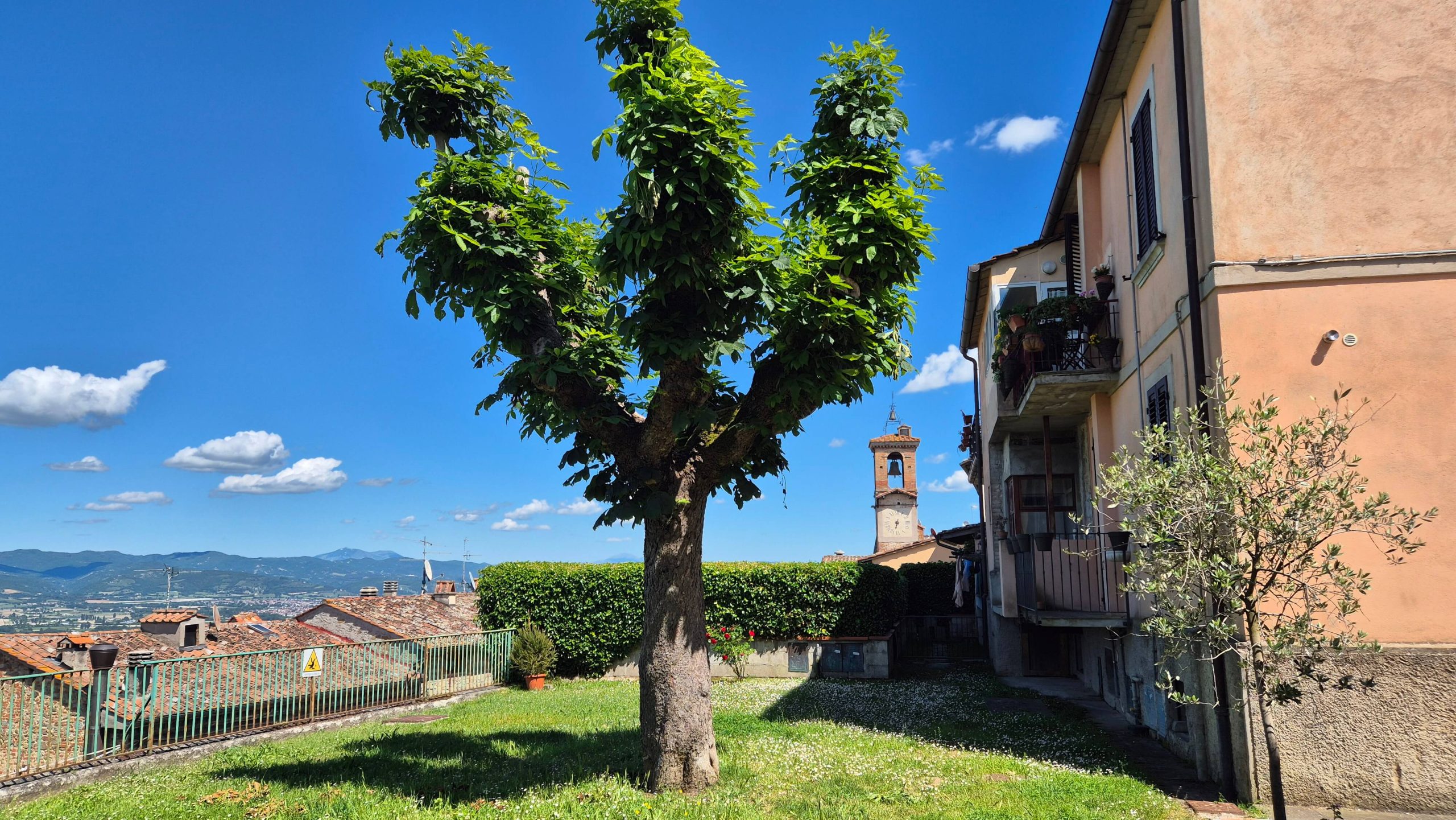
We park just outside the town walls (ah, the advantages of quiet Umbria!) and head straight towards the highest point of the village: the old Rocca complex. Today, little remains apart from the round tower, some ruins and the Cassero gardens, but the views are impressive. From here, you can look out across the Alta Valle del Tevere, with rolling hills, cypress trees and the Tuscan landscape in the distance. The Rocca was largely destroyed in 1944 during the Second World War.
Citerna offers wonderful panoramas, and around almost every corner, the village opens up to reveal another view across the valley.
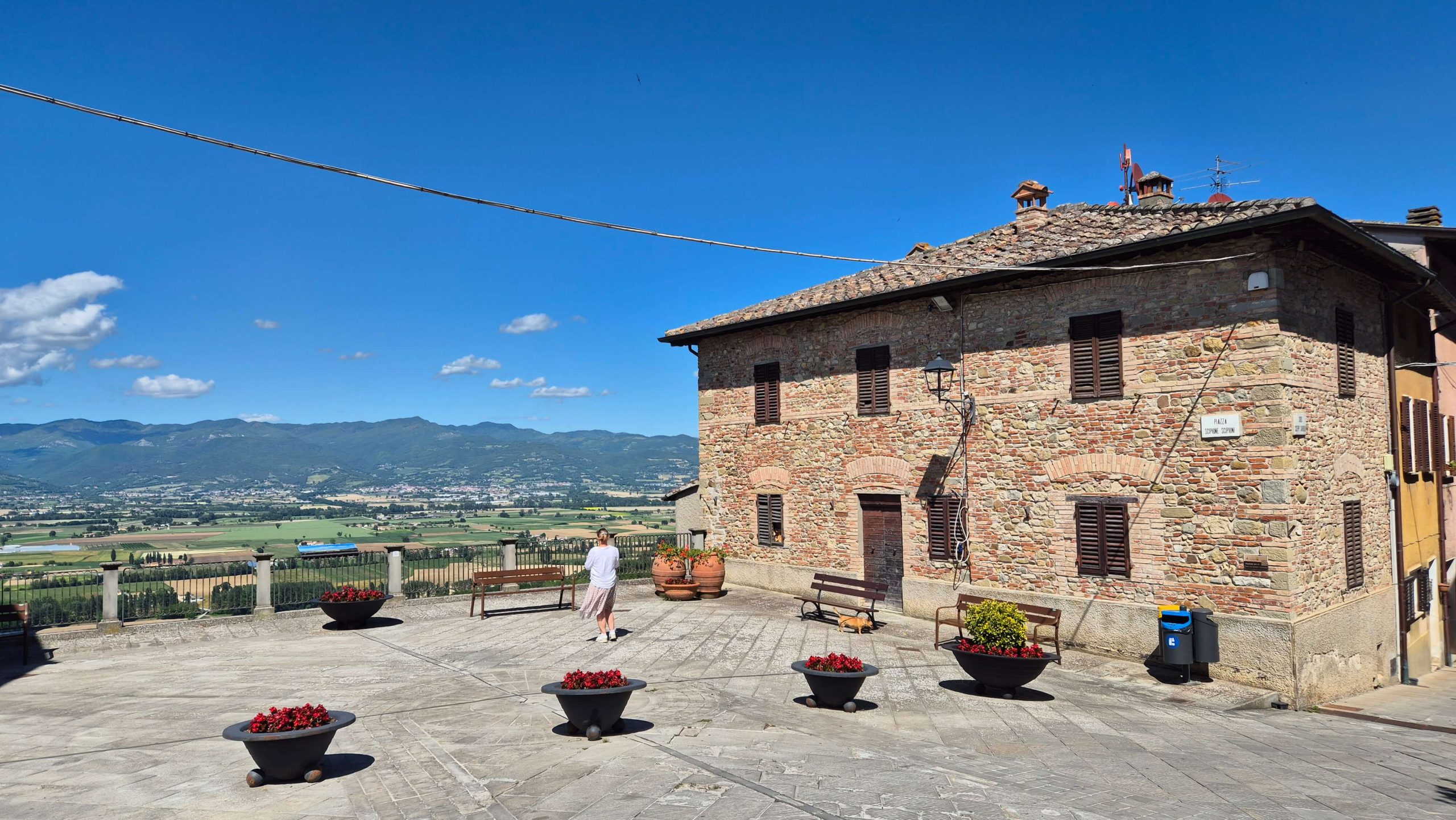
A walk through medieval history
One of Citerna’s most distinctive features is its beautifully preserved Camminamenti Medievali. These covered walkways run along the old town walls, with elegant arches framing wonderful views across the Valle del Tevere. You are literally walking along the old fortifications, while below, the landscapes of Umbria and Tuscany stretch out across the valley.
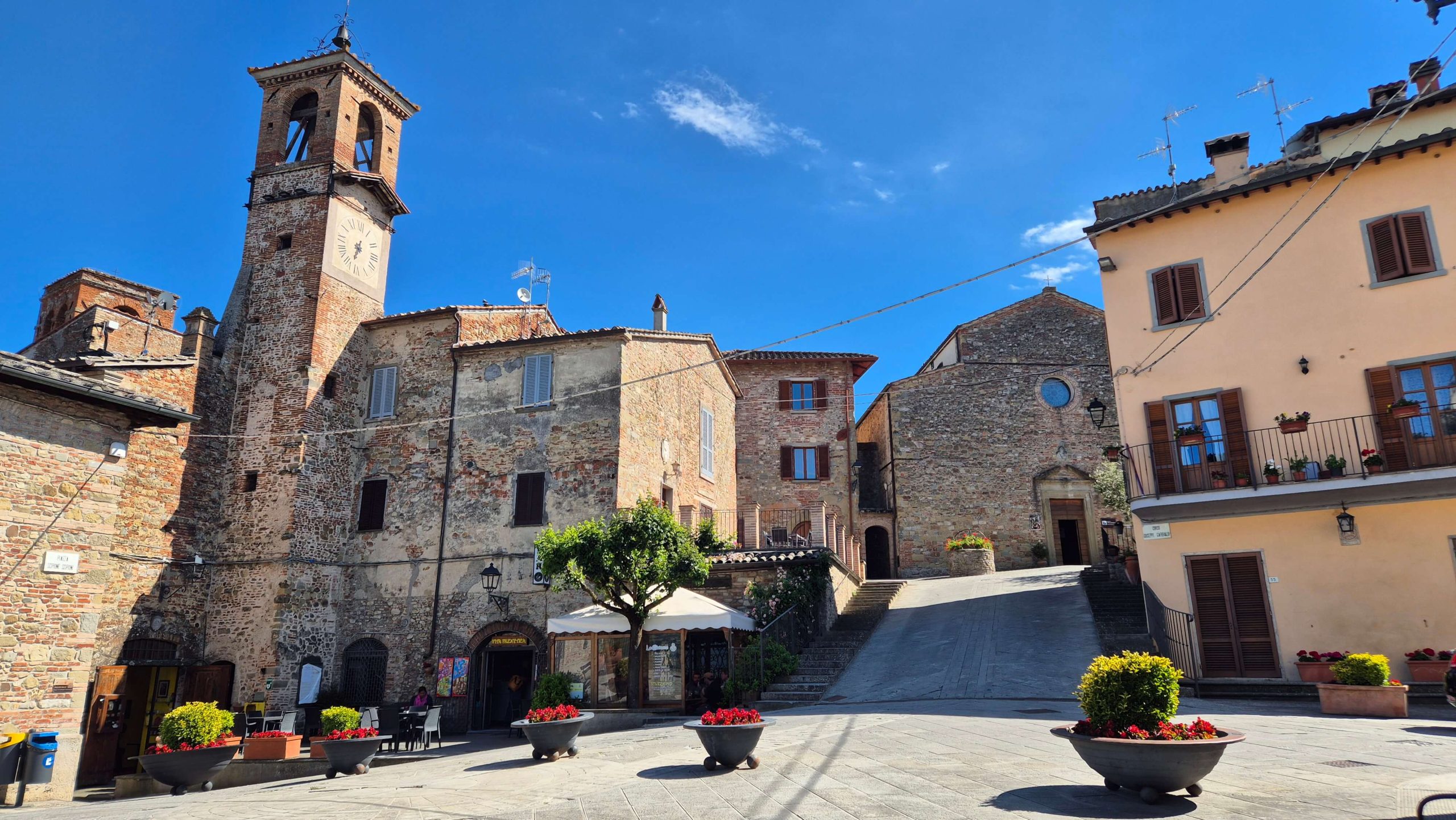
Along the way, you’ll also come across the Torre dell’Orologio, the historic clock tower that remains one of the village’s most recognisable landmarks.
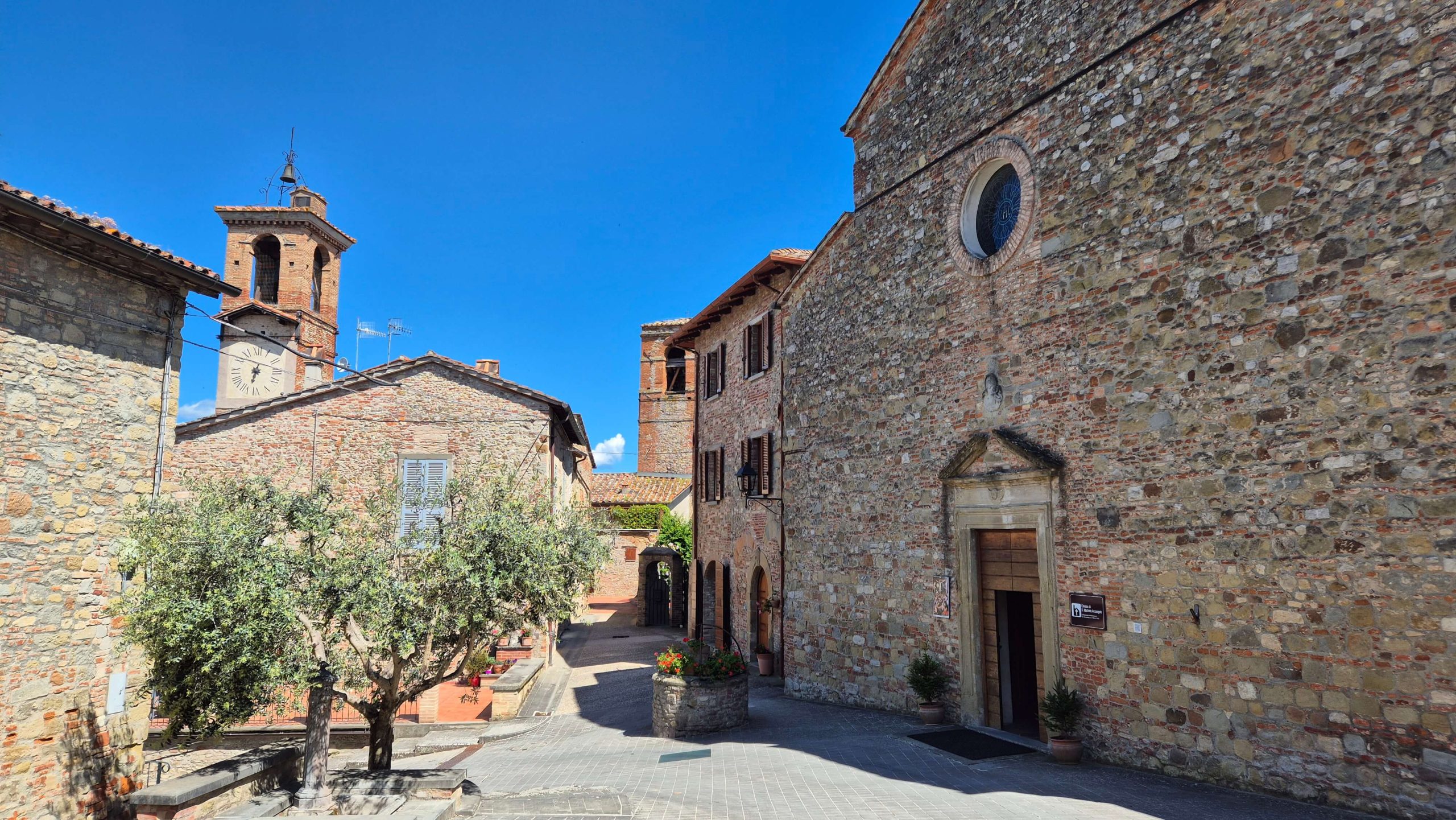
Coffee with a view
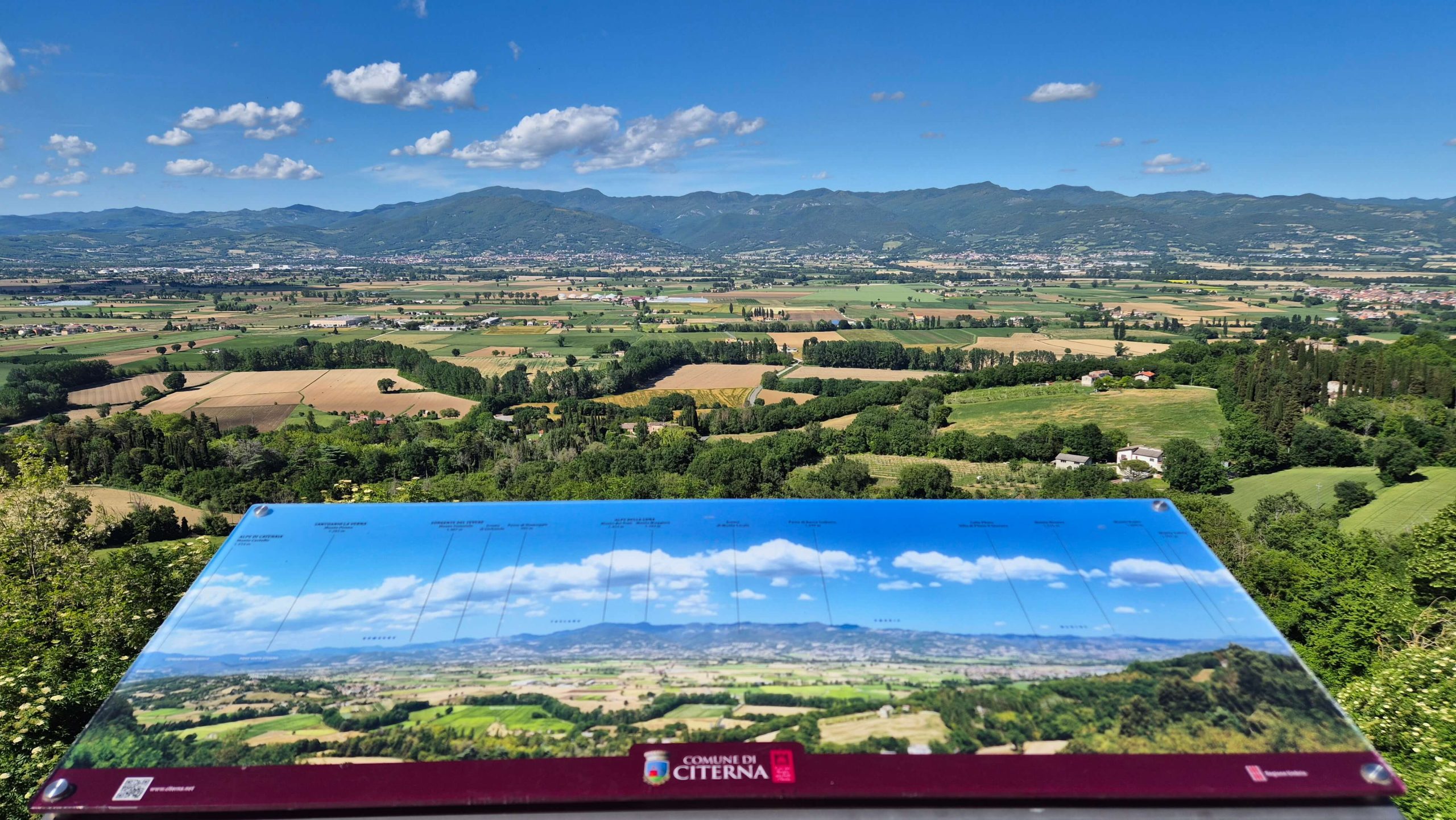
From here, we continue towards Piazza Scipione Scipioni, the heart of Citerna. We stop for a leisurely coffee in the sunshine, overlooking the entire Alta Valle del Tevere. No rush, just time to slow down and take in the vast landscape. The terrazza panoramica really is a little gem.
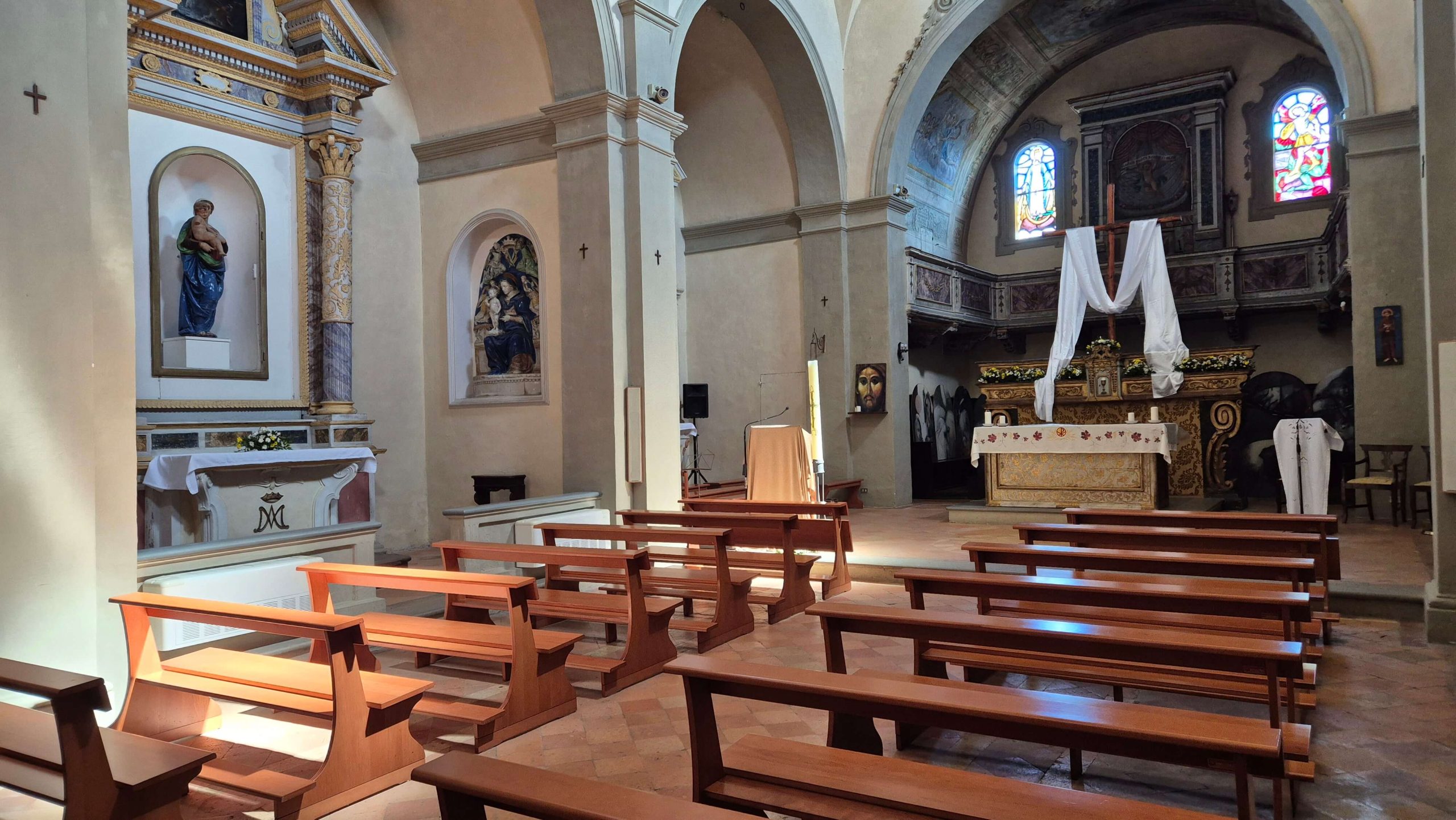
Donatello in a small Umbrian village
If you think Citerna is simply a pretty village, think again. It is also home to an unexpected artistic treasure.
Inside the former church of San Francesco, now a museum church, you can admire works by Luca Signorelli, Pomarancio and Raffaellino del Colle. But the absolute highlight is undoubtedly the famous Madonna di Citerna, a colourful terracotta sculpture attributed to the young Donatello. The sculpture dates from the early fifteenth century and, following extensive restoration, was once again attributed to Donatello.
The mysterious Ammassi
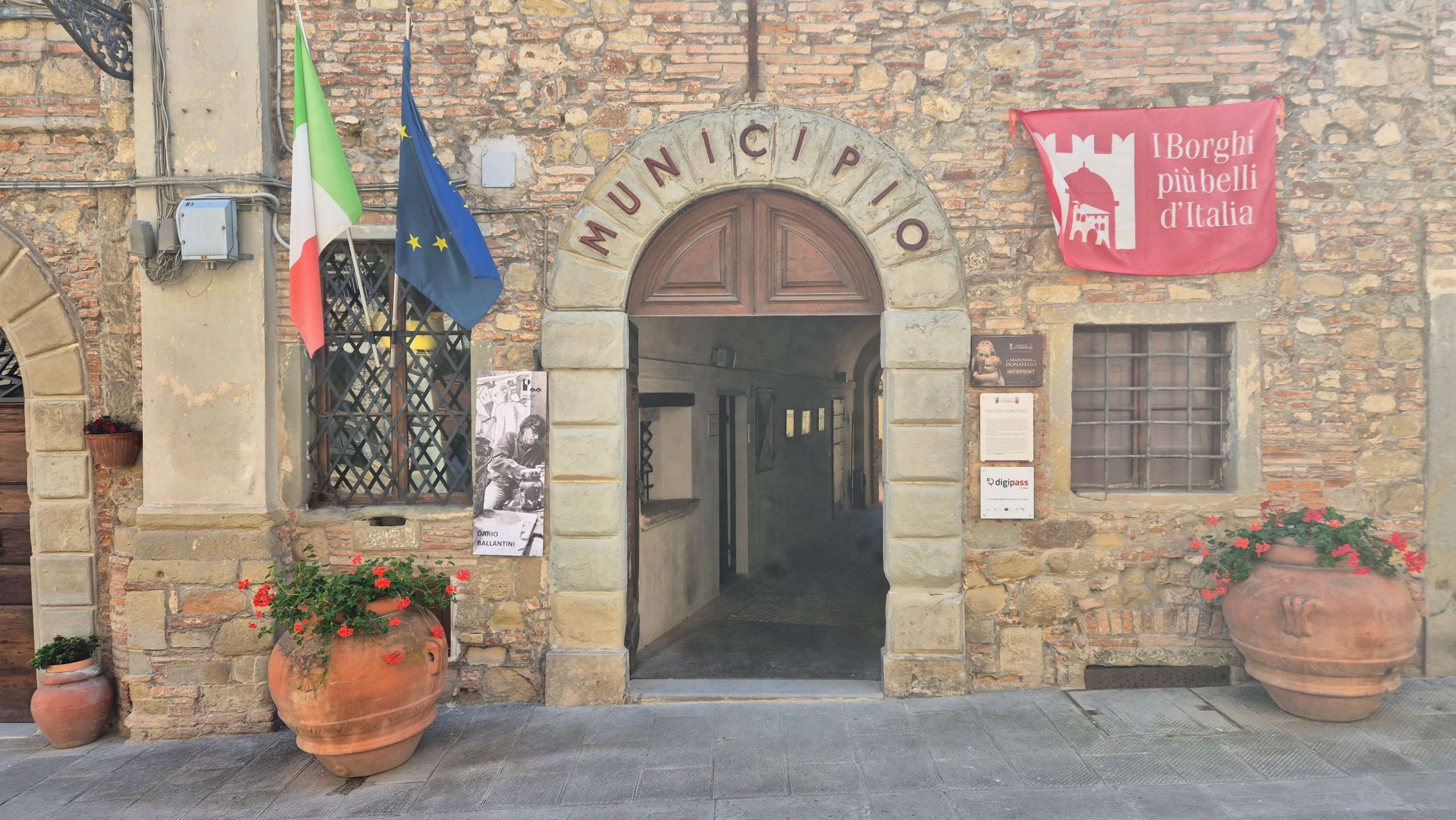
After visiting the museum, we head to the information point in the town hall, where you can learn more about the so-called Ammassi. These are old underground rooms and reservoirs beneath the village, once used to store water and food. One of the largest spaces can still be visited today, offering another glimpse into Citerna’s past.
The Monastero di Santa Elisabetta
Close to Porta Romana stands the Monastero di Santa Elisabetta, a Franciscan monastery. It was built on the site of an old pilgrims’ hospice and rebuilt after the devastating earthquake of 1917. The adjoining church has a striking hexagonal shape and is home to a moving Pietà. High up inside the church is the enclosed choir, where the nuns once followed Mass through the grilles.
Why Citerna is so lovely
Citerna is not a village of grand spectacles. Its charm lies in the details: a walk along the old town walls, a coffee with a view, an unexpected Donatello, quiet monastery corridors and the peaceful atmosphere of a borgo that still feels wonderfully authentic. It’s the kind of place where there is no need to hurry. Just take your time and enjoy Citerna piano piano.
Where to stay near Citerna
Villa Badia near Città di Castello
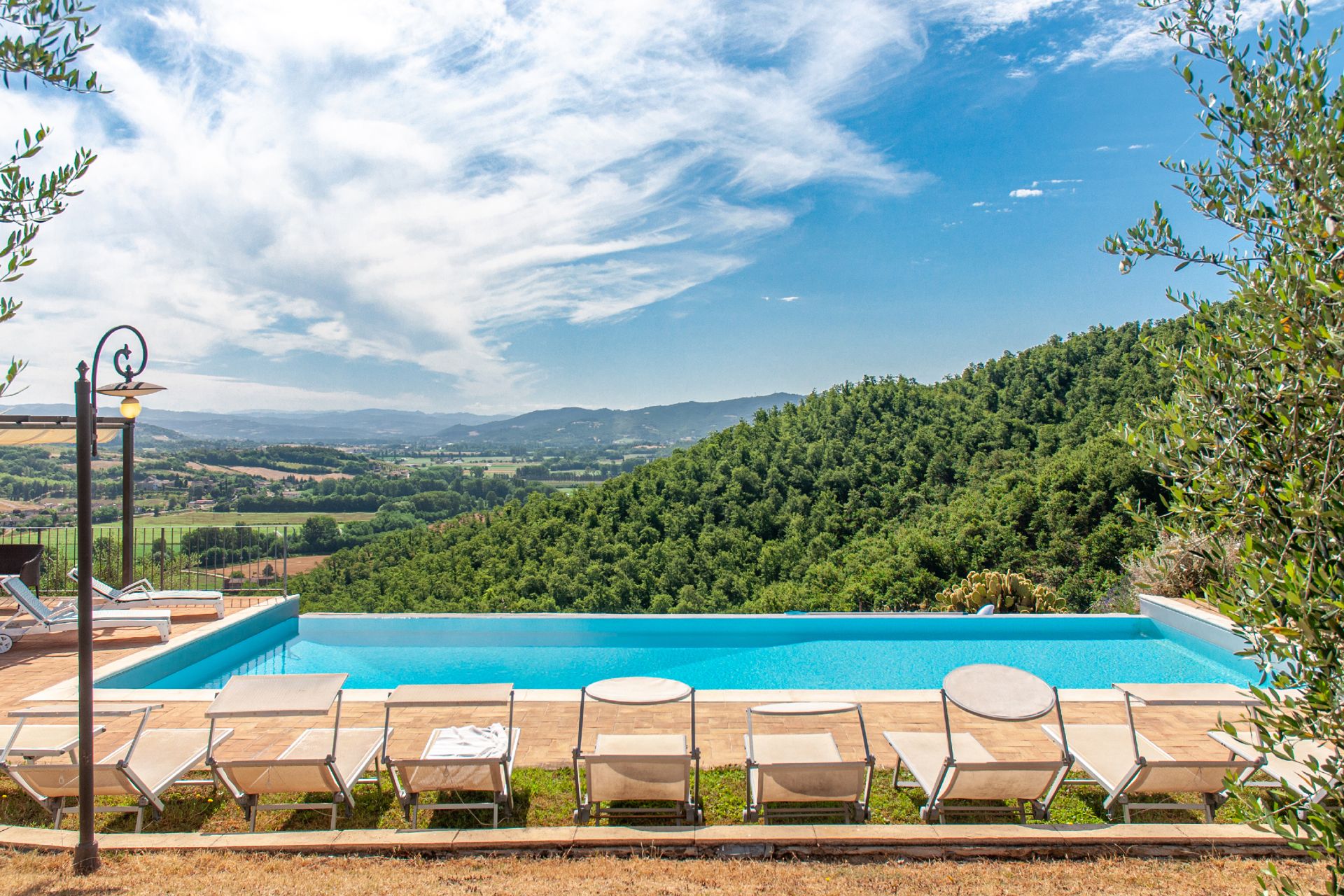
Casale Rancaccio in the forests between Città di Castello and Arezzo

Copyright: @scrittofoli


0 Comments