
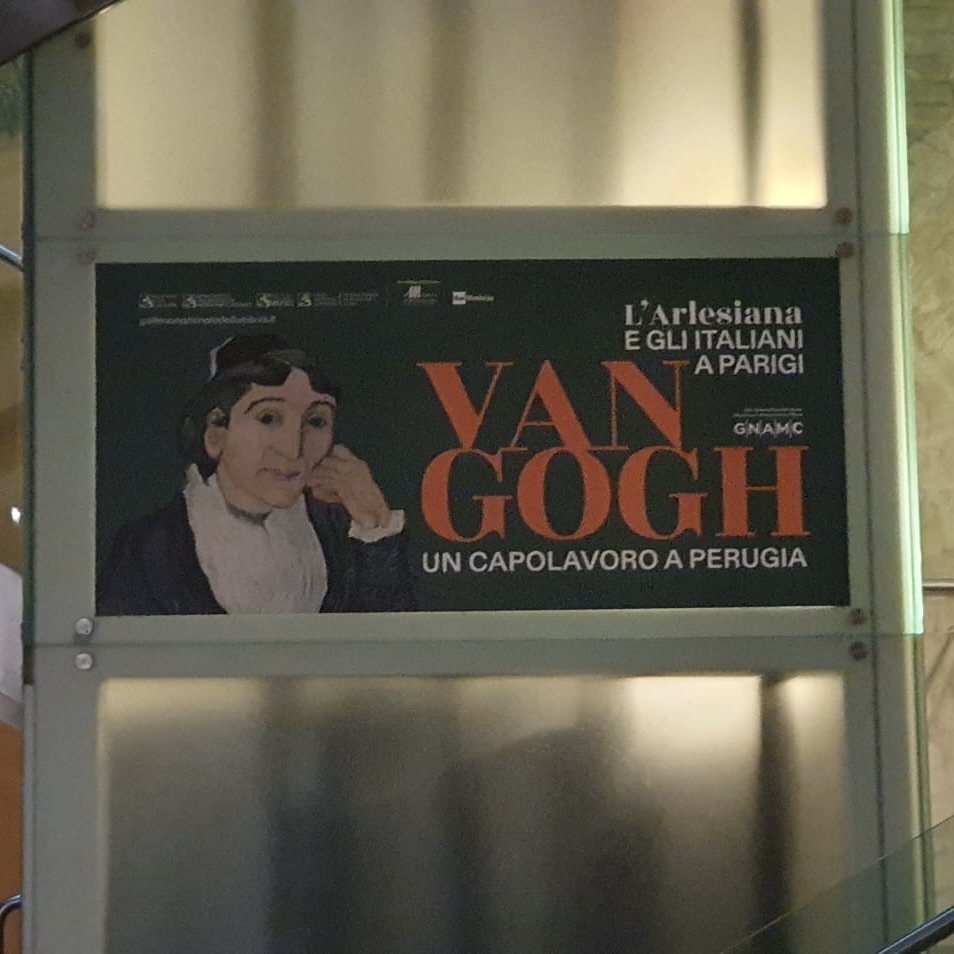
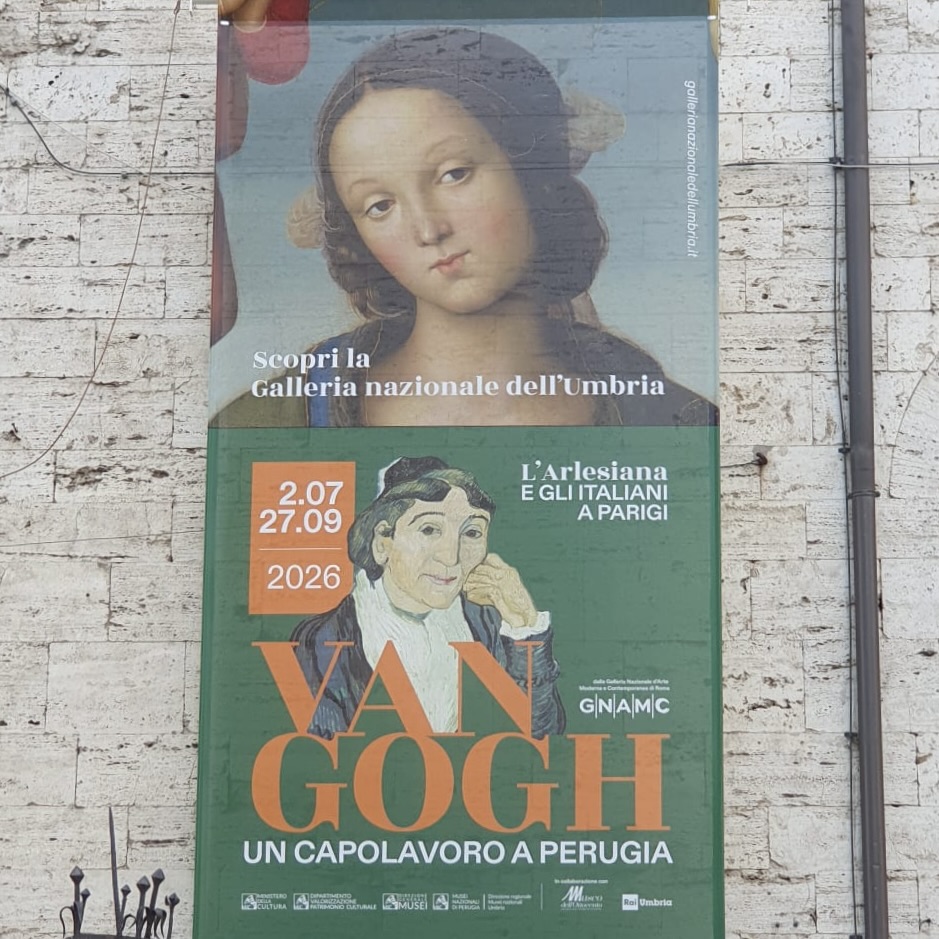
Are you spending your holiday in Umbria and wondering about the best things to do in Perugia? This exceptional exhibition is the perfect reason to visit Perugia, the capital of Umbria. Until 27 September, you can admire Vincent van Gogh’s world-famous painting L’Arlésienne (The Woman from Arles) at the Galleria Nazionale dell’Umbria. The masterpiece is on exceptional loan from the Galleria Nazionale d’Arte Moderna e Contemporanea in Rome.
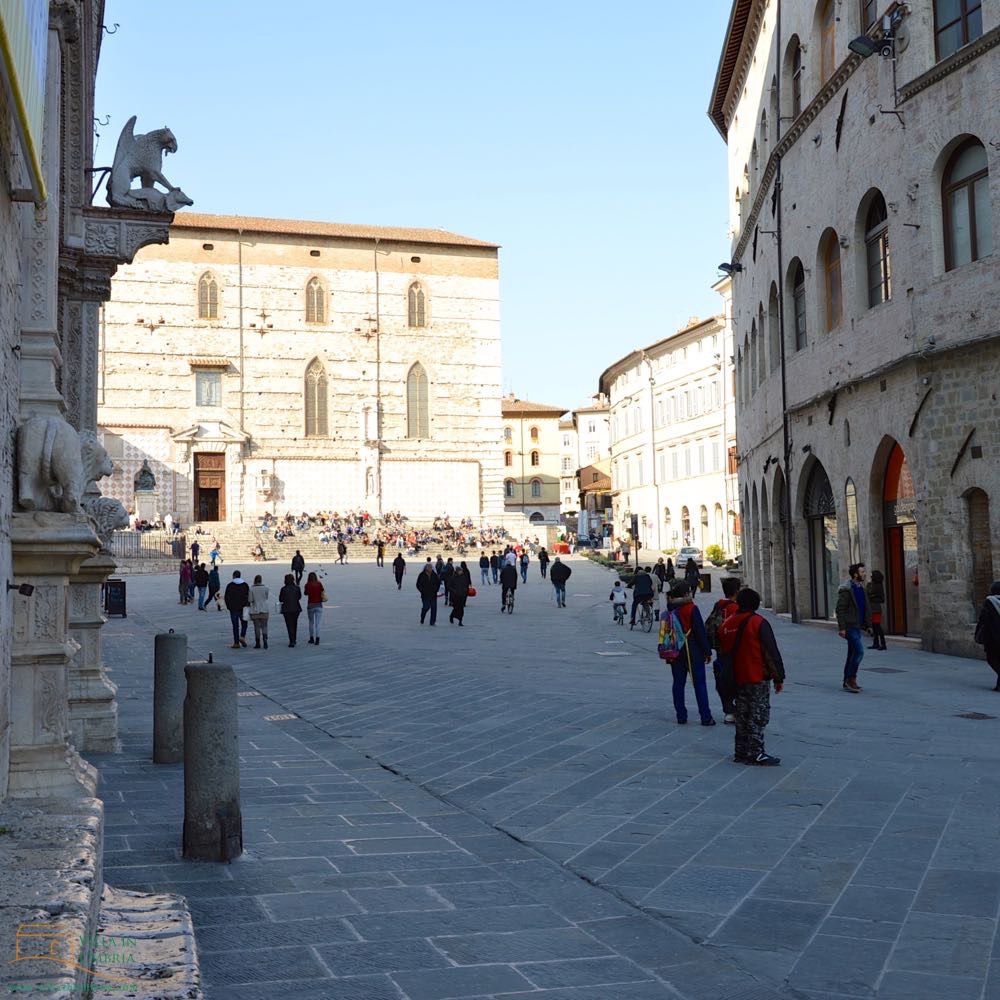
A visit to this exhibition combines perfectly with a stroll through Perugia’s historic centre, one of the most beautiful and atmospheric towns in Umbria.
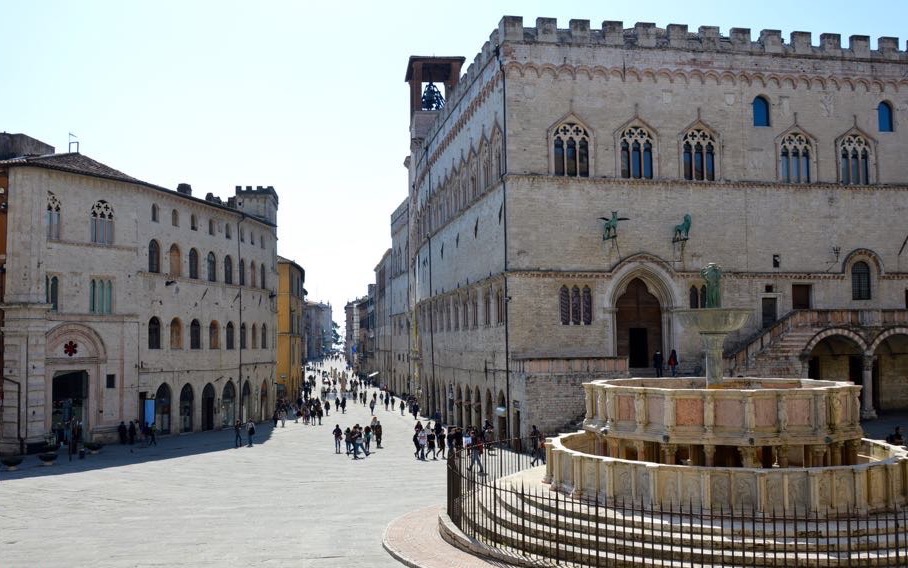
Visit Perugia: artistic treasures in a historic palace
The museum alone is reason enough to visit Perugia. The Galleria Nazionale dell’Umbria is housed inside the magnificent Palazzo dei Priori, located on Corso Vannucci, Perugia’s lively main street lined with shops, cafés and restaurants. The medieval palace also serves as the city’s town hall.
The permanent collection spans forty galleries and ranks among the most important Perugia attractions. Here you’ll discover the rich artistic heritage of Umbria through masterpieces by artists including Piero della Francesca, Pinturicchio and Perugino, the renowned Renaissance painter who gave Perugia its artistic fame.
If you’re interested in art, history and Italian culture, this museum should definitely be part of your day trip to Perugia.
More than one masterpiece
Van Gogh’s L’Arlésienne is the centrepiece of Un capolavoro a Perugia (A Masterpiece in Perugia), an annual summer initiative in which the Galleria Nazionale dell’Umbria brings an exceptional work of art to the city.
Following Gustav Klimt’s The Three Ages of Woman in 2024 and Modigliani’s Nu couché last year, this summer belongs to Vincent van Gogh.
However, don’t expect an exhibition focused on a single painting. The exhibition explores the artistic world in which the work was created and the cultural exchange between France and Italy at the end of the nineteenth century. L’Arlésienne is displayed alongside works by Italian artists who were active in France during the same period, offering fascinating insight into their shared artistic influences.
An exhibition that builds towards its grand finale
One of the exhibition’s most distinctive features is that Van Gogh’s famous painting only appears at the very end.
The exhibition is designed as a journey of discovery. The first gallery immerses visitors in nineteenth-century Paris through an immersive multimedia experience. You’ll learn about the Italian artists working there, the artistic dialogue between France and Italy, and, of course, the life and work of Vincent van Gogh.
The next room presents sixteen paintings from the Museo dell’Ottocento di Pescara – Fondazione Di Persio Pallotta. Artists such as Giovanni Boldini, Giuseppe De Nittis, Silvestro Lega and Antonio Mancini illustrate the evolution of female portraiture. Rather than focusing solely on beauty, these works reveal the character, emotions and social status of the women portrayed.
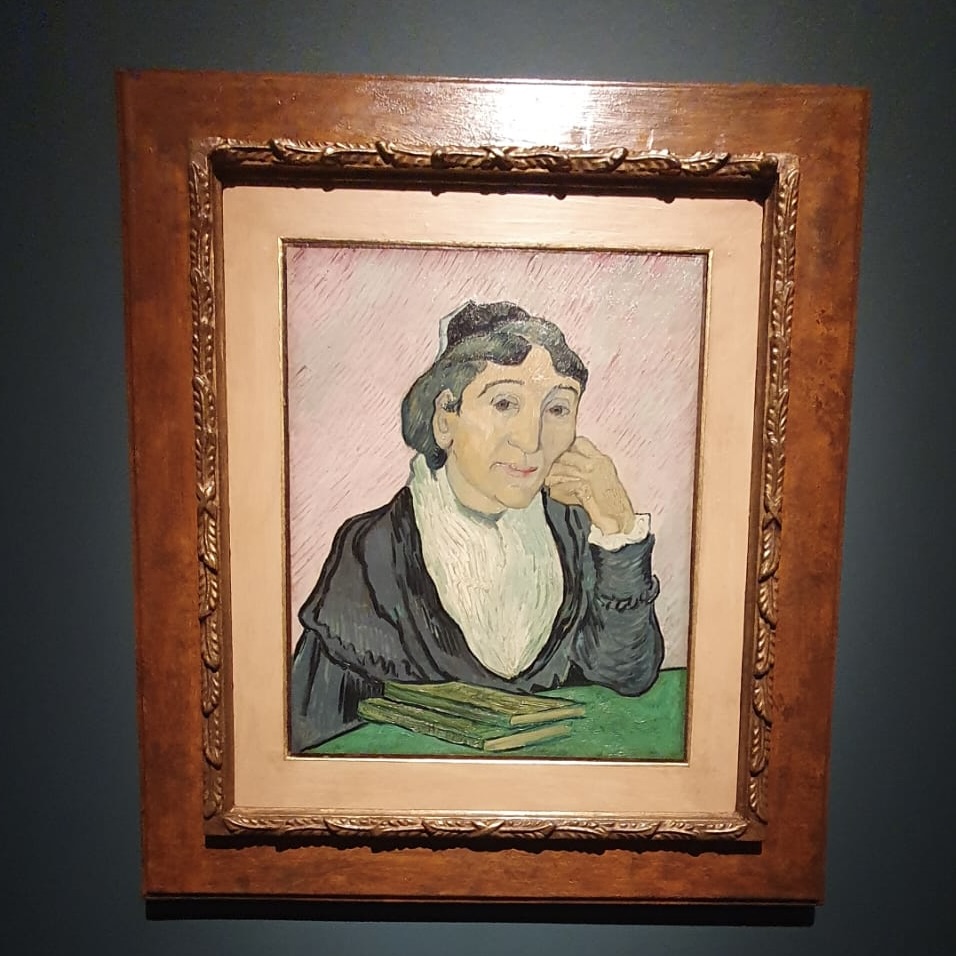
Only in the final gallery do you encounter the exhibition’s highlight: Van Gogh’s remarkable L’Arlésienne.
The story behind l‘Arlésienne
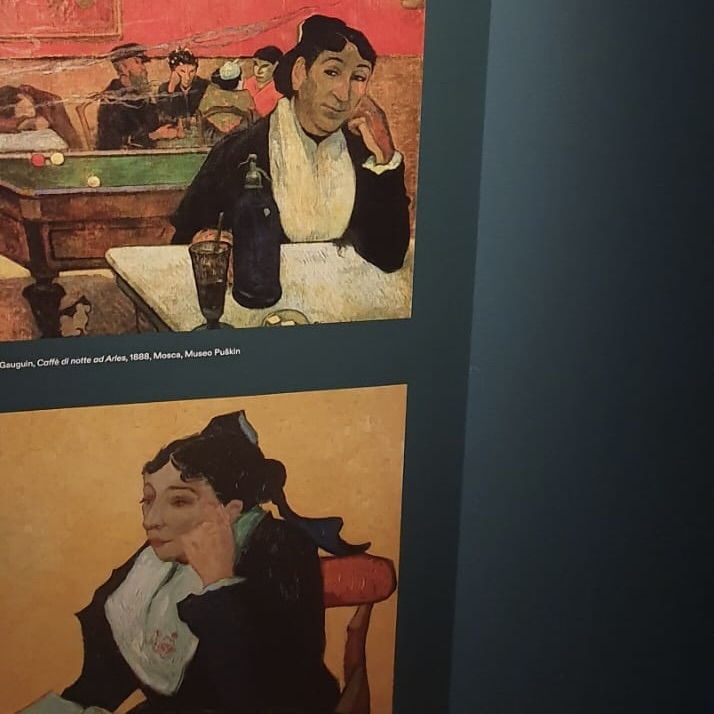
The painting is also known as Portrait of Madame Ginoux. Van Gogh painted several versions of this portrait. The first was created after Marie Ginoux posed for both Van Gogh and Paul Gauguin and is now housed at the Musée d’Orsay in Paris.
For the version currently on display in Perugia, Van Gogh was once again inspired by one of Gauguin’s works. At the same time, his fascination with Japanese woodblock prints is clearly visible in the bold black outlines, flat areas of colour and striking pink background.
Van Gogh painted this work while staying at the psychiatric hospital in Saint-Rémy-de-Provence. Despite this difficult period, some of his most celebrated masterpieces were created there.
The woman portrayed is Marie Ginoux, owner of the café-restaurant in Arles that Van Gogh frequented after moving into the famous Yellow House.
Practical information
The Galleria Nazionale dell’Umbria is open daily from 8:30 am to 7:30 pm. On 1 and 29 August, the museum will exceptionally remain open until 11:30 pm.
Visitors wishing to learn more can join a guided tour in Italian on 9, 16, 23 and 30 August, and 13, 20 and 27 September, all starting at 5:30 pm.
The guided tour lasts approximately one hour and costs €5 in addition to the admission ticket. Reservations can be made via gnu.cultura@orologionetwork.it.
Things to do in Perugia
This Van Gogh exhibition is the perfect reason to visit Perugia during your holiday in Umbria. Combine your museum visit with a walk through the historic centre, admire the Palazzo dei Priori, relax at one of the cafés along Corso Vannucci, and explore the charming squares and narrow medieval streets that make Perugia one of Umbria’s most fascinating destinations.
If you’re looking for things to do in Perugia, Perugia attractions, or inspiration for a day trip in Umbria, this exhibition is undoubtedly one of the cultural highlights of the summer.
Where to stay in Perugia and the surrounding area
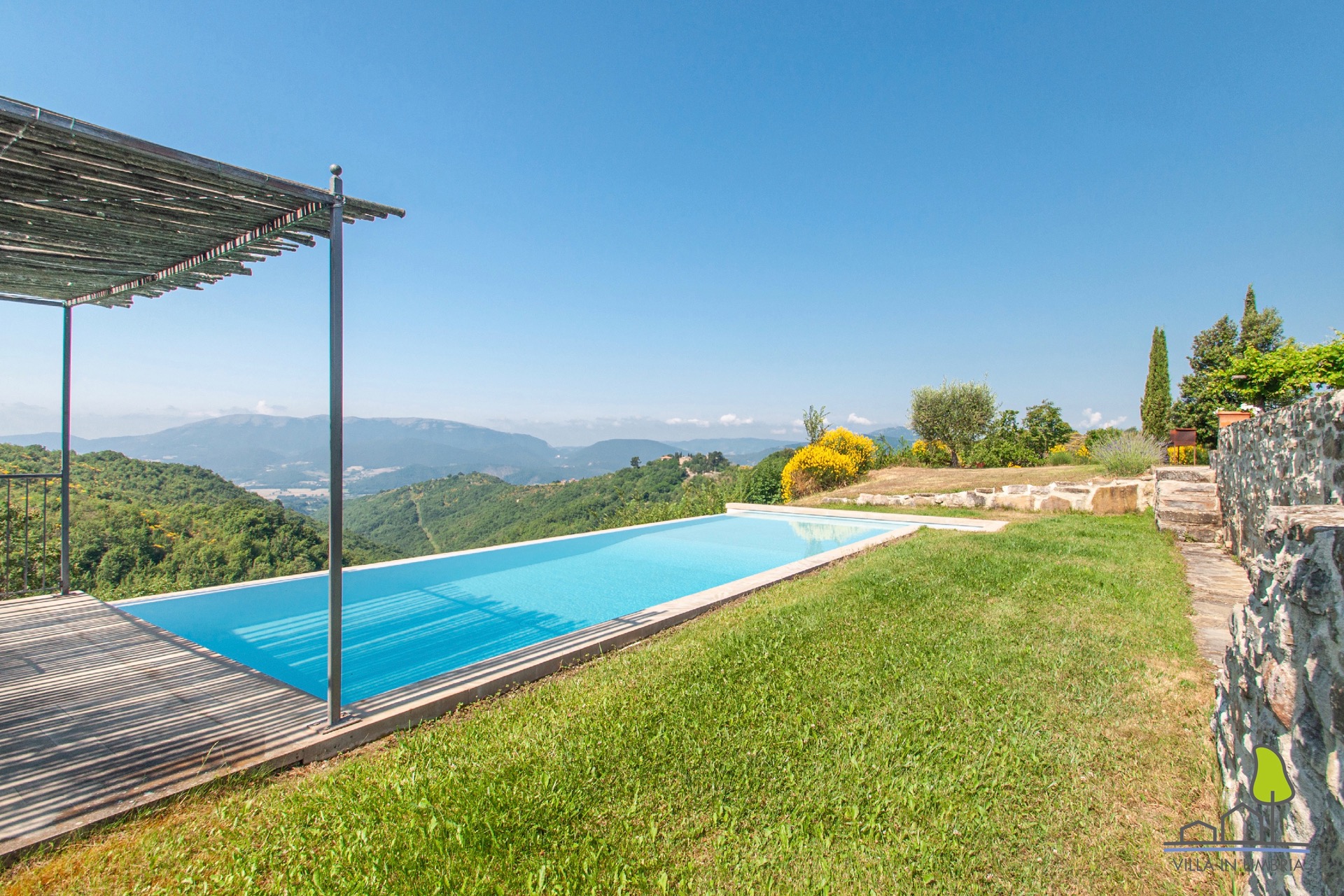
Want to make the most of this exceptional exhibition while discovering the many things to do in Perugia? Stay in one of the beautiful holiday homes nestled in the green hills surrounding the city. It’s the perfect base for combining a visit to the Galleria Nazionale dell’Umbria with a stroll through Perugia’s historic centre, dinner on a lively piazza, and day trips to other wonderful Umbrian destinations such as Assisi, Spello and Lake Trasimeno. Browse our recommendations for where to stay in Perugia, or discover our carefully selected holiday villas in Umbria, including De Rerum Natura and La Torre.


0 Comments